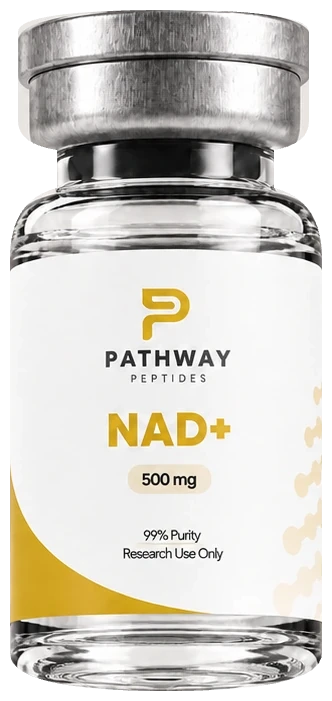



NAD+ is one of the most widely studied compounds in cellular-energy and metabolic-pathway research. It is used in laboratory models focused on mitochondrial function, DNA-repair signaling, oxidative-stress response, and overall cellular metabolism. It serves as a foundational molecule for studying cellular aging, energy-pathway regulation, and repair signaling mechanisms.
NAD+ acts as a coenzyme involved in electron-transfer processes during cellular-respiration pathways, influencing redox balance and ATP-production signaling. It also serves as a substrate for enzymes associated with DNA-repair and cellular-response pathways, including PARP and sirtuin signaling models. Variations in NAD+-associated activity have been examined in research involving mitochondrial function, metabolic aging, and cellular-efficiency signaling within controlled laboratory environments.